An Abrupt End to An Incredible Adventure

My time as a VAC guide in Europe has come to an abrupt end as Europe becomes the hotspot for COVID-19. I hope to write about my last few trips, Luxembourg, Barcelona and Tunisia, in the next few posts. In this post, I hope to bring clarity to this abrupt change.

On Thursday, March 12th, COVID-19 was a concern but not enough to close the sites or stop traveling to areas that were not red zones. So, my friend and I went to Tunisia as planned and had an incredible time. The next day, the situation changed, I received messages from my colleagues saying that we were given the option to return to Canada without being penalized financially. I also received a flood of message from people back home expressing their concern. I did my best to not let my anxiety control me and did my best to enjoy every minute of sun. 

When we landed in Paris, our boss called telling us we had to decide by end of day Saturday on whether we were going to leave or not. In the end, only 1 of the 16 guides remained. Once I return to my room, I immediately started looking at flights home. I had originally booked my flight in May with AirTransat and had hoped to rebook but the site crashed as thousands of travelers tried to do the same. Flights direct to Canada (it needed to be direct because countries were closing their borders left and right and it was risky to have a layover) were costing in the thousands and climbing fast as demand skyrocketed. I couldn’t book such a costly flight without speaking to my boss first and after a long and stressful trip home, I was too exhausted to make any important decisions. 
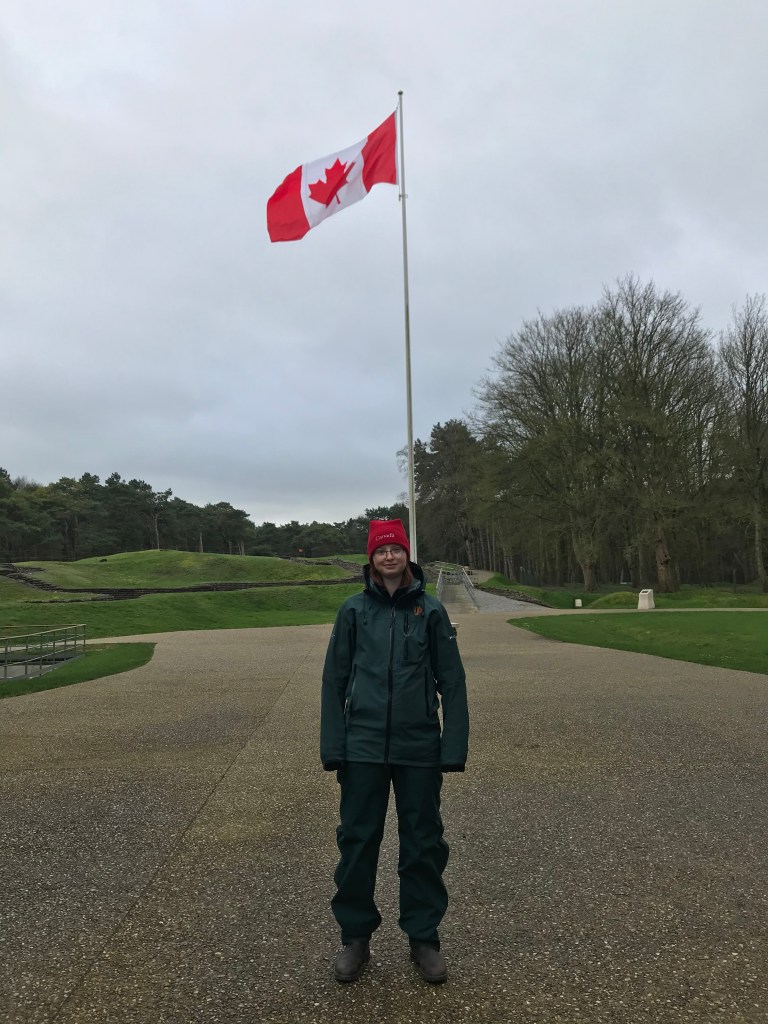
Last Day as a VAC guide

Work on Saturday was solemn, and it was quiet despite it being a weekend and our manager took the time to talk to us each individually to answer all our question and respond to our concerns. The sites were to close as of Monday but for now we did our best to continue on as usual. With the encouragement and help of the management team, I booked my flight home at work which was set to leave on Tuesday even though the later flights were cheaper. It was all moving so fast and I did not want to get stuck. 

Saturday night it was announced that all non-essential services would cease and so the sites closed on Sunday. We went to work to finish say goodbye, finish final tasks, and return our uniforms. That night we all started to pack and clean our rooms and had one last get together.
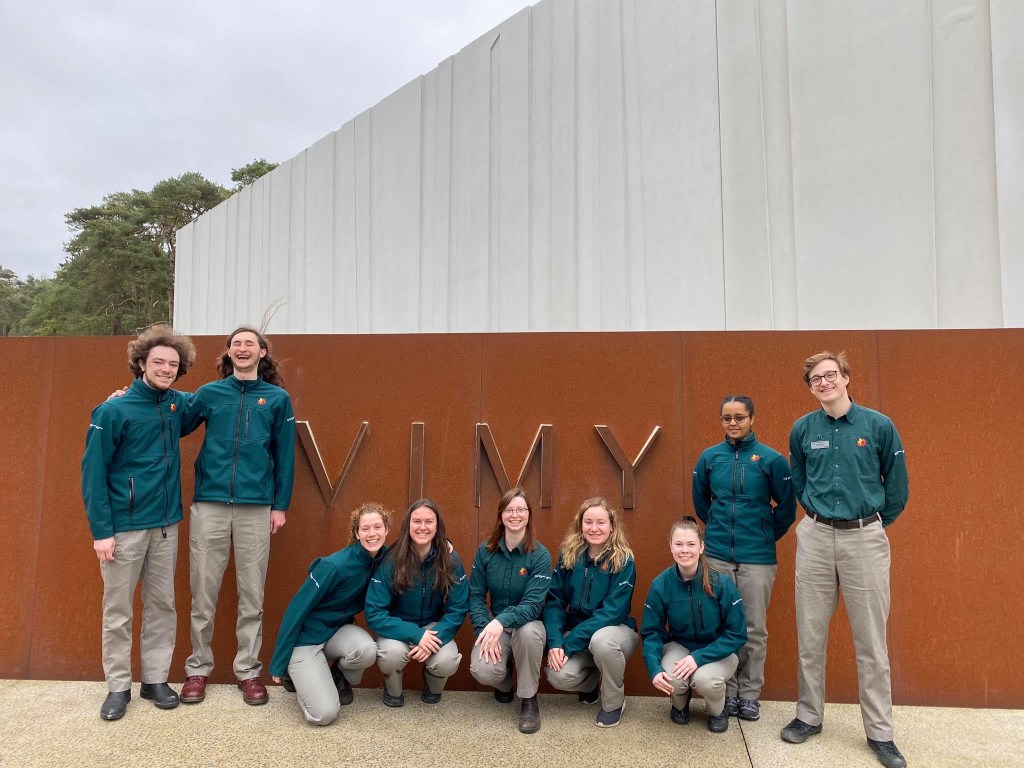
Last day at Vimy

On Monday, I hosted breakfast and that’s when our manager called the guides who had planned to leave later in the week and told them to book a flight that left before Wednesday. It was a mad scramble with all of us trying to find flights for our two friends. It was a hair raising and stressful moment, but everyone managed to get on flights that left Tuesday. We heard later that day that the airports were closing on Wednesday and that night we listened to Macron announce the closure the nation’s borders and introduced a fifteen-day quarantine starting Tuesday, March 17th, at noon. 

In four days, the situation in France changed dramatically but through it all I felt supported by Veterans Affairs Canada and the European operation team. My flight was the last to leave Terminal 3 at CDG and I was incredibly thankful to be on my way home. There was no way I could have done it without the help of the team and my fellow guides. I am devastated to have this incredible experience cut short, but I am happy that everyone is safe. 

I am now starting my 14-day quarantine to help flatten the curve and do my part to stop the spread in Canada. I may not be showing symptoms, but I could be a carrier and I will do my best to protect my community. It may be hard and inconvenient, but everyone should practice social distancing. We should also not loose ourselves to anxiety and remember to be good neighbors. And to my fellow guides, thank you for helping make this an experience unforgetable.
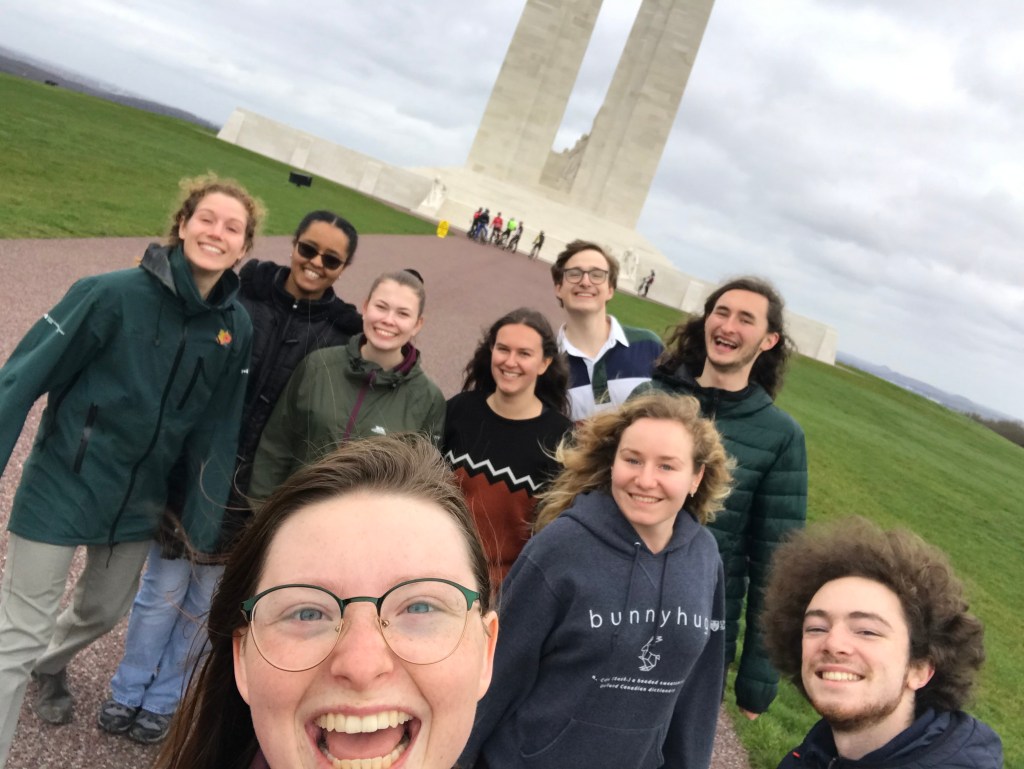
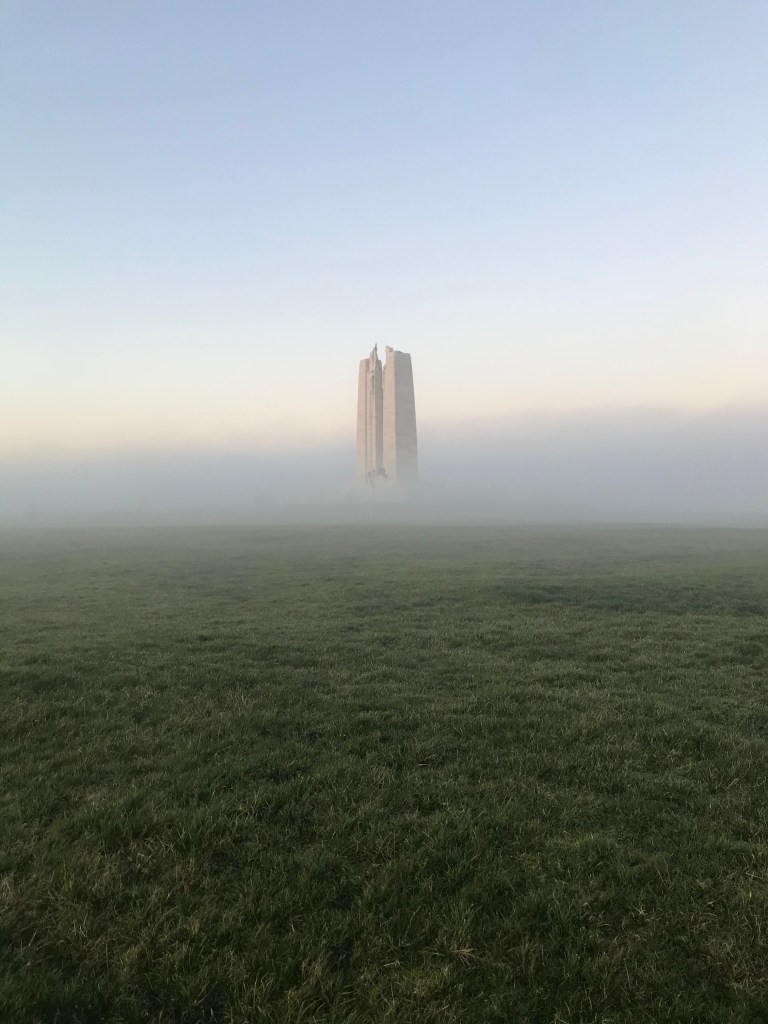
Last Time at the Monument

A Day in the Somme

This week I was primarily at Beaumont-Hamel and I’m going to share with you what a typical day looks like for a guide at BH. 

BH is about a 40-minute drive from where the guides live and most of the ride consists of country roads and farmland. Work starts at 8:45 so we leave between 7:40 and 7:50 depending on if we want to go to the bakery first. I have finally learned how to drive to the site without using google maps but every once in a while, I need to check if it’s the third or second exit that needs to be taken during one of the numerous traffic circles. The only one in Canada that I am familiar with is in Kemptville to get to their Timmies but I now feel much more confident driving through them. 

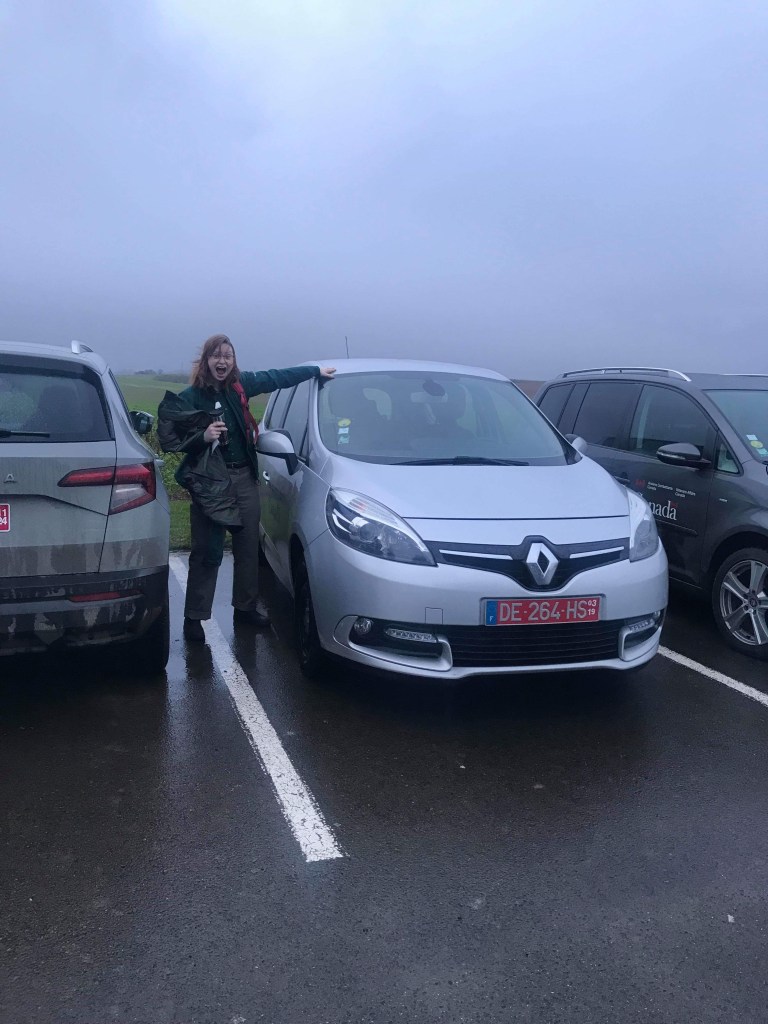
Anna after her first time driving in France

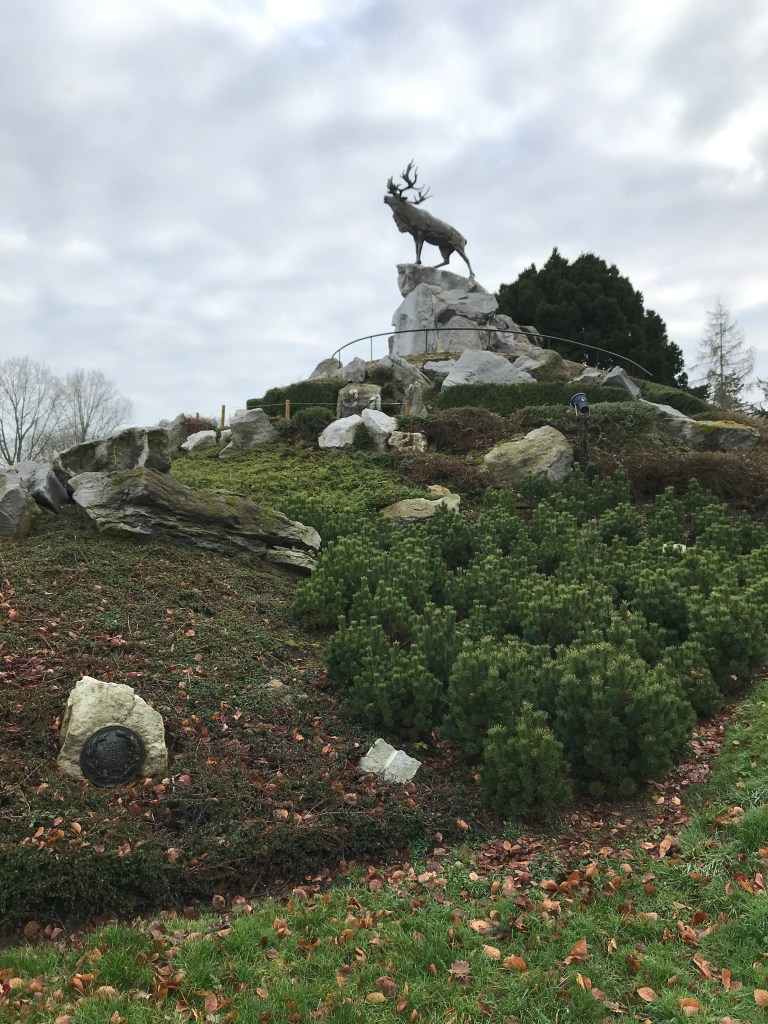
There are normally 4 guides working on site but sometimes there will be 5 or 6. These guides rotate between four different posts on site; entrance, visitor center, caribou monument, and tour guide. The time slots are usually about an hour and a guide at the visitor center gives everyone a 10-minute warning before rotations start. During lunch rotations, the tour guide stays at caribou unless a tour is scheduled. 

The visitor center position (Accueil) is at the front desk and they are in charge of writing down statistics, checking the facilities and booking tours. The entrance guide (Entrée) mostly hangs out in a little heated cabana and comes out when a visitor approaches to welcome them, tell them about what the site has to offer, gives brochures, and tells them the guide at Accueil the nationality of the visitors and how many have arrived on site. We are allowed to read books from the sites library which are mostly about Canadian military history to widen our knowledge and to keep busy. The caribou guide always does a full walk around the site in the morning but after that stays near the memorial to answer questions and to ensure that rules—such as no running on site or climbing the caribou—are heeded. The tour guide provides tours of the site which last between 35-45 minutes when there is no tour, they perform administrative tasks.

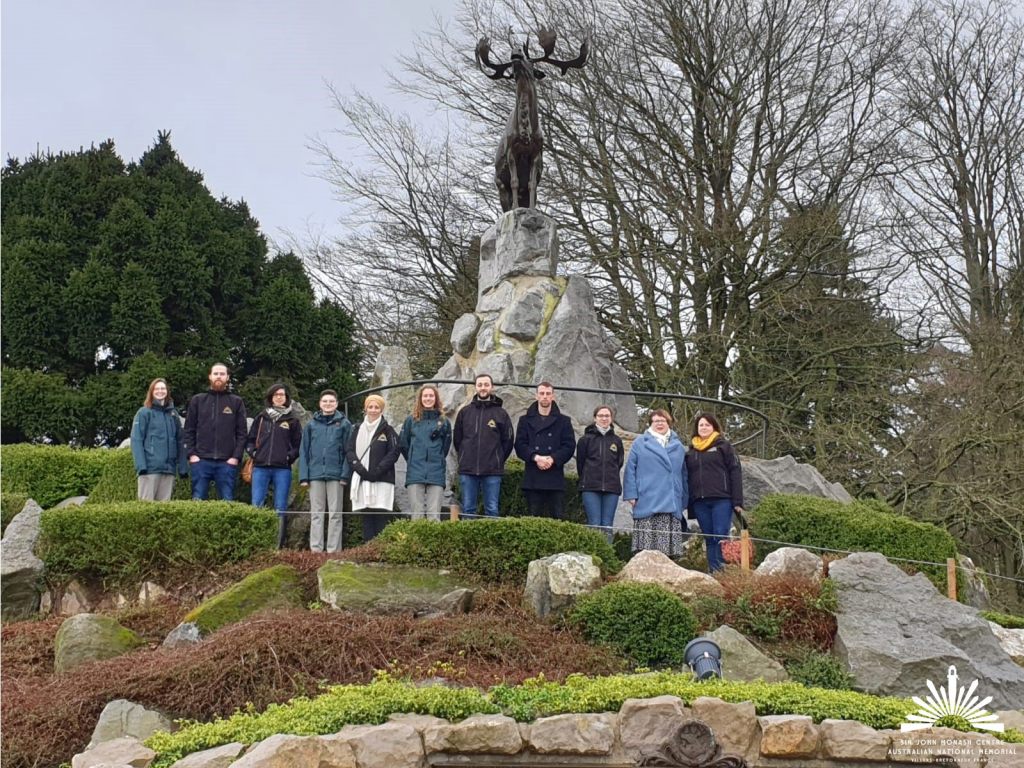
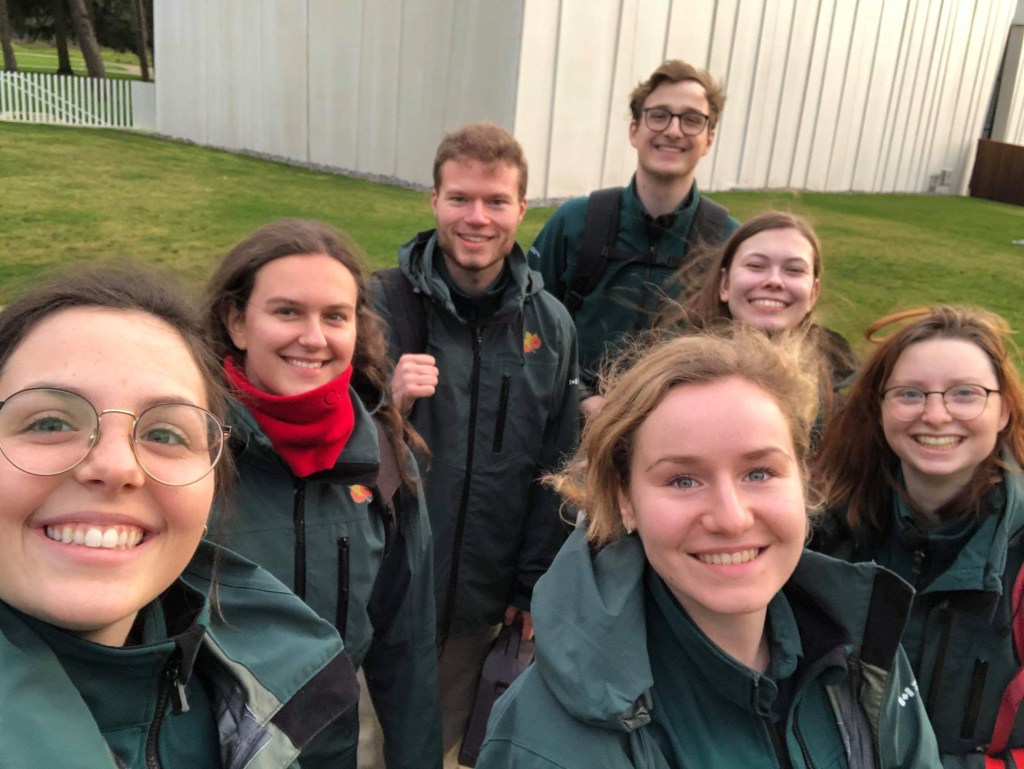
Sir John Monash Center visitors service team at BH

The site is much quieter and gets less foot traffic because it is in a more remote area and isn’t as well know compared to Vimy. However, BH gets many Brits coming in because Tiepval Memorial, a significant Commonwealth Somme memorial, is very close-by. We do also get some French locals who do the loop around the 74-acre site. 

BH also does not give nearly as many guided tours in a day. While a slow day at Vimy might mean only one tour for each of the 7 guides on rotation, at BH there can be multiple days in a row where no one requests a tour provided by one of us. Often the visitors prefer the self-guided tours—pamphlets with a map of the site and information—rather than the 45-minute tour provided by one of us. It is also common for groups to come with their own tour guide whom they hire to take them around multiple sites in the Somme. This is especially the case with larger groups who arrive on coach buses who stay round 30 to 15 mins and use the free public washrooms in the visitors’ center, a rarity in Europe. 

I enjoy working on the site because it allows me to get some much-needed introvert time because the guides only see each other during rotations. Some of the more extroverted guides have a hard time with this and much prefer the busyness of Vimy. Both sites are unique, and I enjoy being able to work at both sites! I hope this helps raise awareness of this small but significant site. I highly recommend making the trip if you are in the area and we would love to give you a tour!

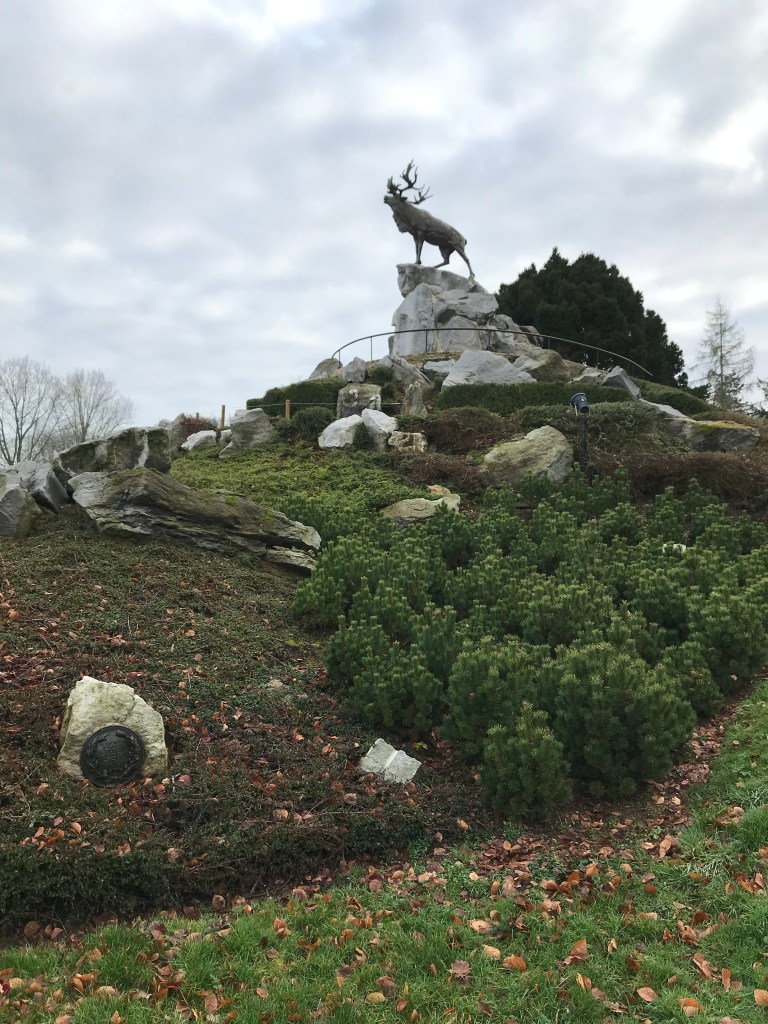
The Beaumont-Hamel Newfoundland Memorial

Anecdotes from Vimy

This week I worked at the Canadian Vimy Memorial and I hope to share with you what my days are like. 

The days move quickly at Vimy with rotations lasting between 30 minutes and 2 hours. We always have a guide stationed at the Canadian flag in the trenches sector and two in the visitor center. At these postings, we are to welcome guests and provide information and we also record statistics to better serve our future guests including nationality and arrival time. The majority of guests have so far been British and French, but Canadians typically spend the most time on site. 

Another crucial role is providing free 30-minute guided tours which are always booked day-of in the official language requested by the guest. These tours run every 30 minutes and it’s very important that our tours are neither too long nor too short. Our tours are reviewed three times during our four months, and we are given feedback so that we can improve. A guide at Vimy is often scheduled to do two guided tours a day but sometimes we give more and on quiet days we might get none. When we aren’t doing a visit, we read about the Great War or complete administrative tasks. 

We are also stationed at the cemetery on site and the monument which are one- and two-hours postings respectively. During the lunch rotation, these places are not usually manned but the security team on site is always making its rounds. Sometimes, the two-hour monument shift passes by quickly but other times it can feel like an eternity. The longest shifts are on days when it’s quiet, cold, and windy, and there are no guests and no relief from the elements. 

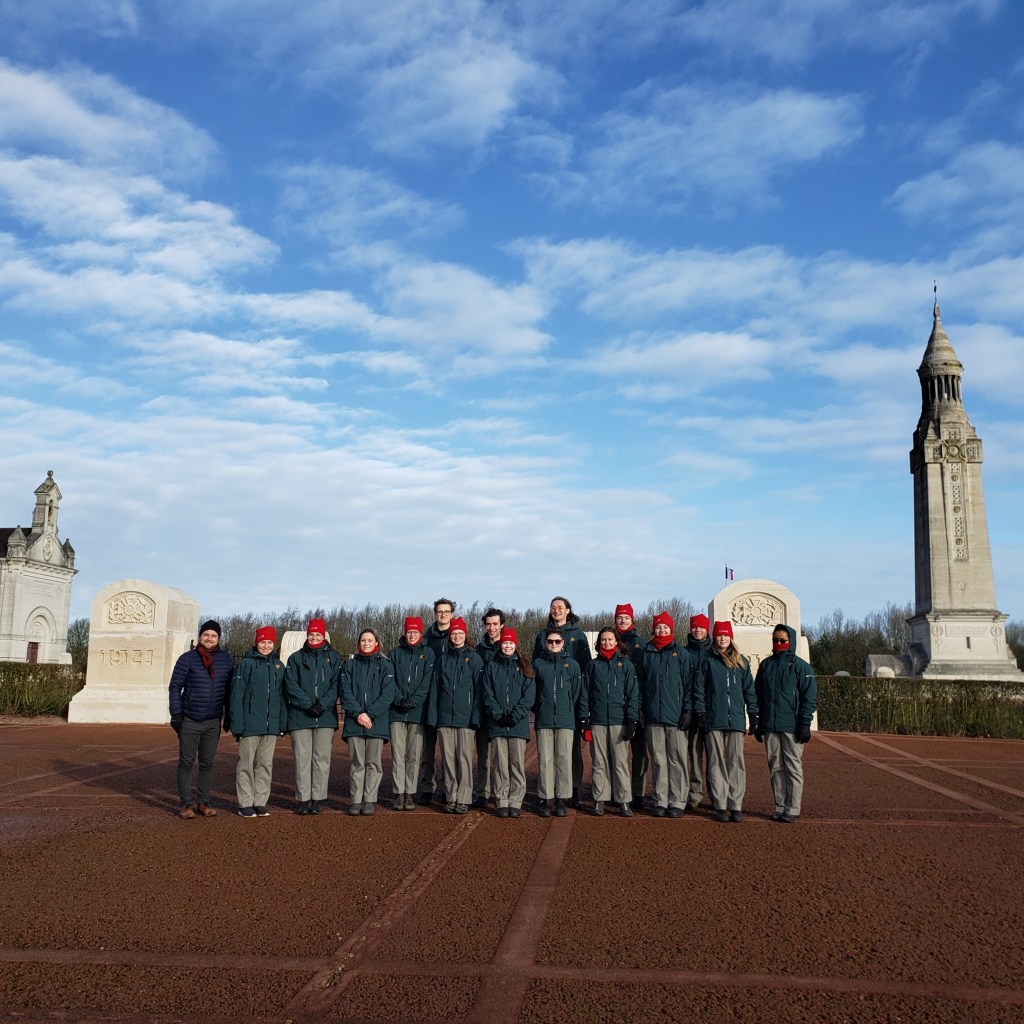
Notre Dame de Lorette

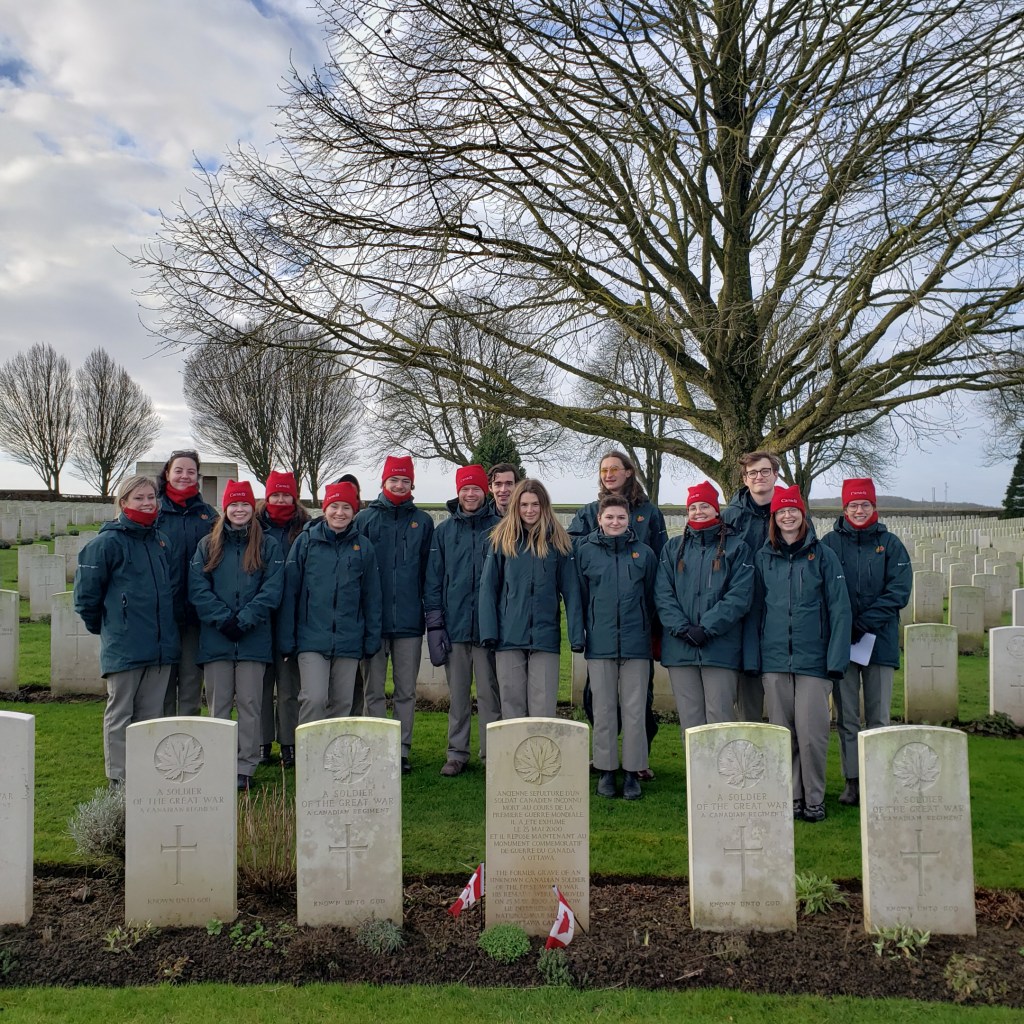
Every Monday, the center opens two-hours late for ‘Continuous Learning’. The first few weeks consisted of reviewing site operations and providing more information about the memorials. This week we went on a field trip to Notre Dame de Lorette, L’Anneau de la Memoire, et Cabaret Rouge. Notre Dame de Lorette is a large French cemetery and memorial on the top of Hill 163. It was really interesting how commemoration is done compared to the commonwealth where men are often buried close to where they died compared to these mass graves and cemeteries. L’Anneau de la Memoire was constructed for the 100th anniversary of the Great War and lists all the names of those who died in the region in alphabetical order and includes all nationalities, French, German, British, Canadian, etc. Lastly, cabaret Rouge is the cemetery from which the unknown soldier was exhumed and brought to Canada to be place in the Tomb of the Unknown Soldier in Ottawa. 

My favourite visitors so far was a group of students from RMC who came to Vimy for their term break and with them they brought a duffle bag full of Tim Horton’s coffee grounds, Kraft peanut butter and KD! It was an incredible surprise and it made all of us feel a little bit homesick. It’s nice to know that military relief is provided to Canadian students living abroad without these Canadian staples! So, if you ever come to Vimy or Beaumont-Hamel and want all the guides to love you, bring food from home!

Cabaret Rouge at the Tomb of the Unknown Soldier

A Weekend Tour in Belgium

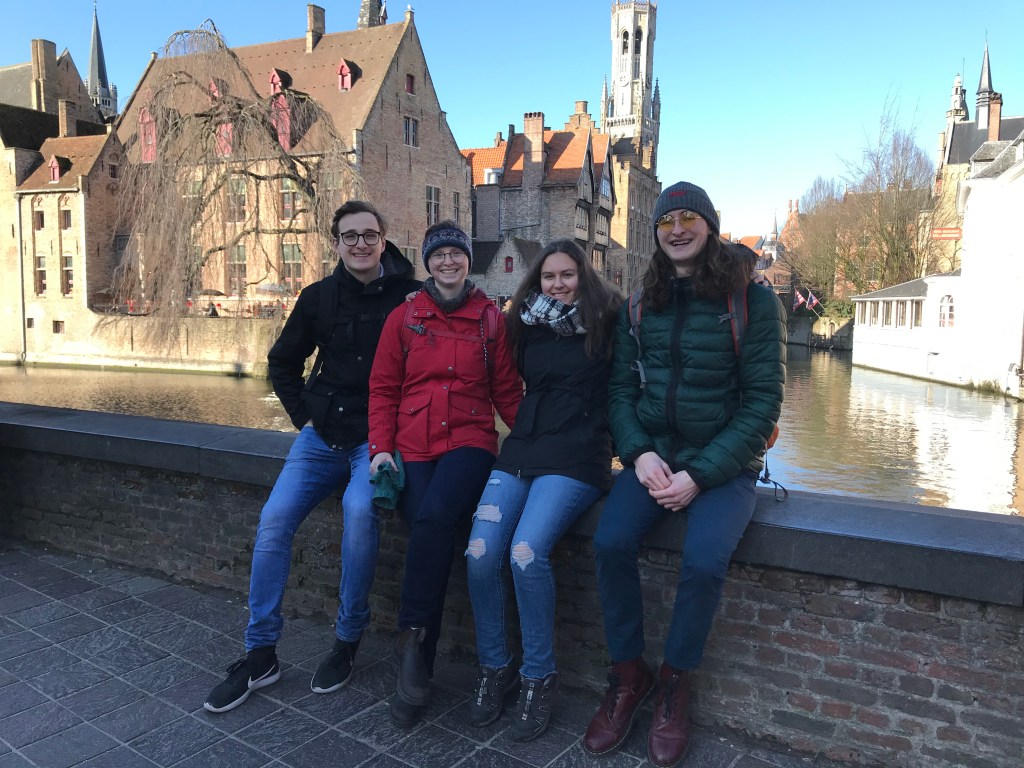
This weekend I traveled to Brussels and Bruges with three of my fellow guides. To clarify my “weekends” are on Thursdays and Fridays because it’s a customer service-based job and most people come to the site on Saturdays and Sundays. 

My Friends and I in Bruges

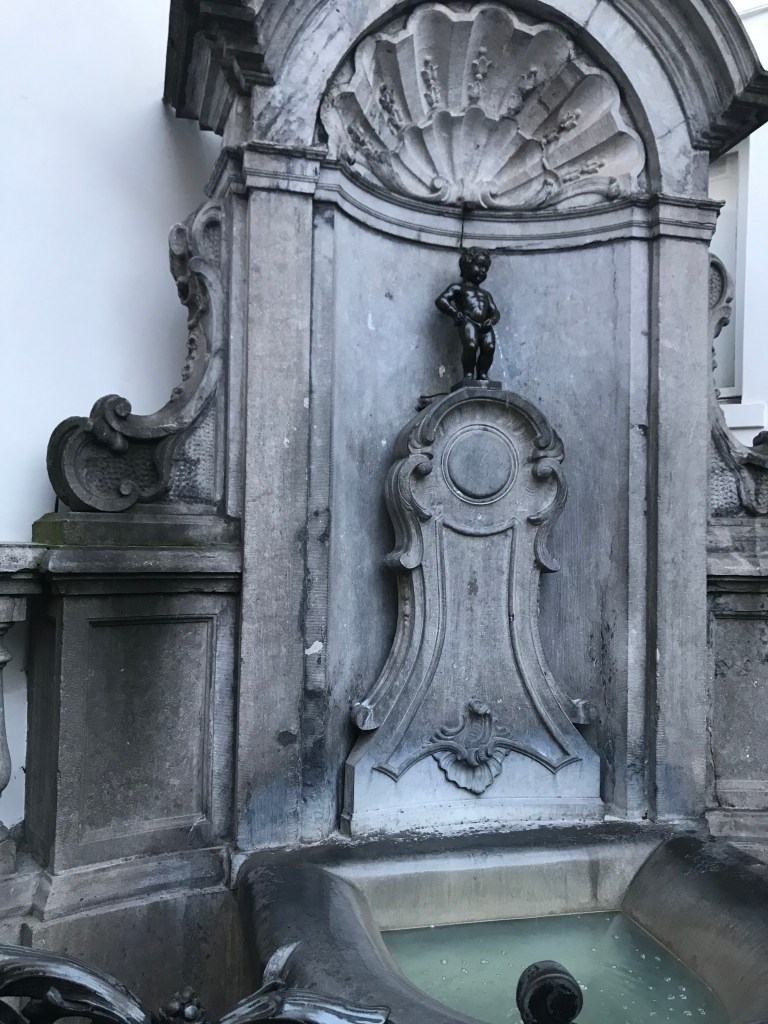
At 6:40 on Thursday, my friends and I got on a train to Lille and then got on another train to Brussels. We arrived at around 8:00 and so we had the whole day to explore. We walked downtown and got fresh waffles and got to the Grand Place and saw Manneken Pis before the crowds arrived. It was interesting to make the walk while kids are walking to school and locals make their way to work. By 10:00, we were joined by many other tourists in the Grand Place though they were few compared to the summer crowds.

Manneken Pis

We had pre-booked a free 2.5-hour walking tour with Sandemans and it was a great way to get to know the city. Our guide was amazing and gave great recommendations! It’s a great way to get to know the city and because it is entirely tip based, the guides work hard to make the tour interesting and informative. One aspect I appreciated was that or guide talked about King Leopold II, the King who owned the Congo Free State and exploited the people and the land in the production of rubber. He is not a figure in history that is discussed often but many believe that what he did should be considered a genocide. Though it was not a story Belgium wishes to highlight, our guide made the point of informing us and teaching us about Belgium’s colonial past. 

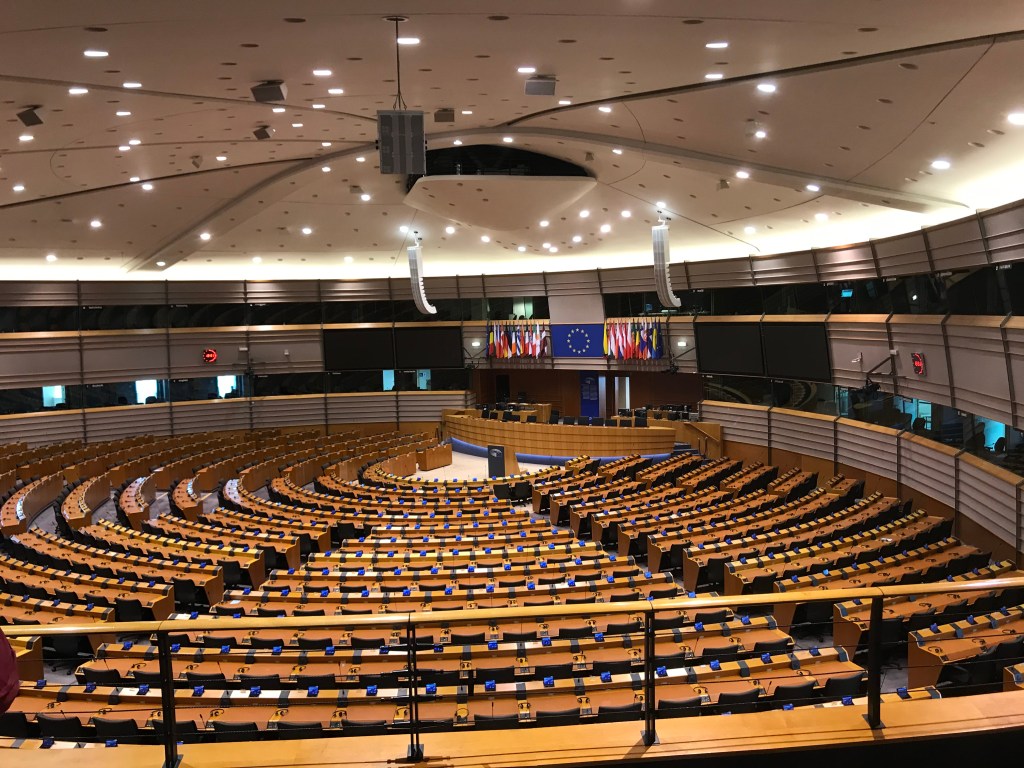
After our walking tour, we made our way to the European parliament. There is so much to do there and it’s all free! We needed our passports to get in, but we were able to tour the parliament and also the 6 floor European History museum. Both were incredible but the history museums exhibit on Rebellious Youth was incredibly interesting and interactive. Additionally, the staff members were all ready to help and were incredibly kind. It is clear that they enjoy working there. 

European Parliament in Brussels

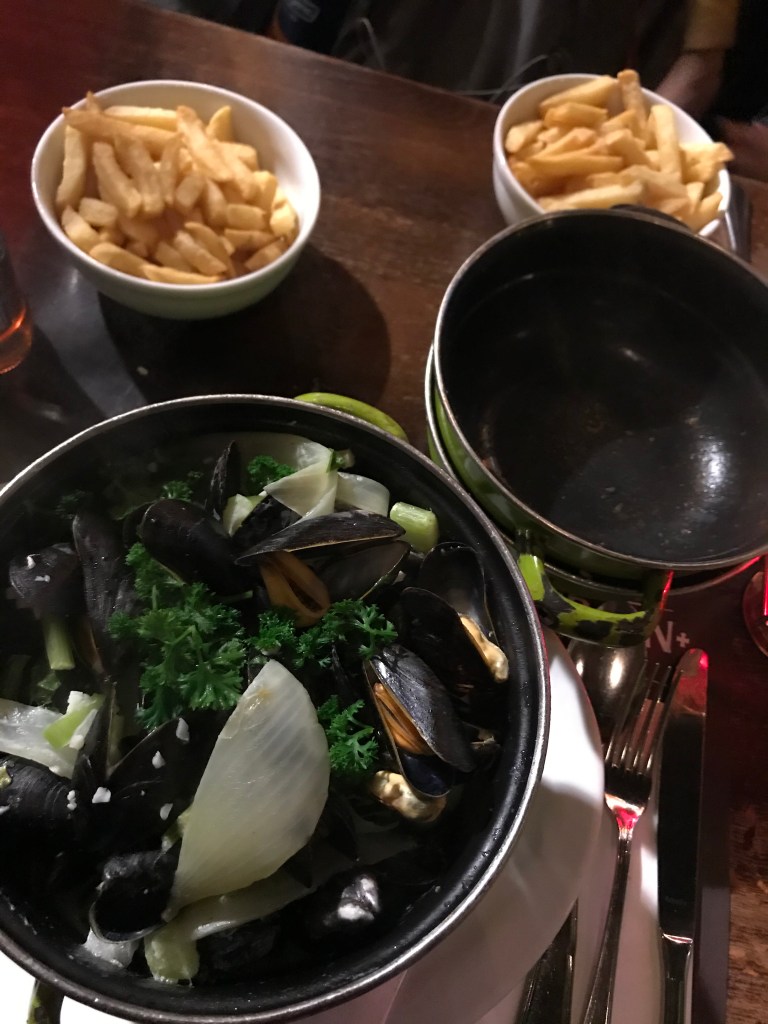
We finished our day with Moules-Frites (Mussels and Fries) which is considered the national dish of Belgium. If you are looking for great fries, try Fritland! Though if you are vegetarian be advised that they use beef oil to fry their potatoes. 

Moules-Frites

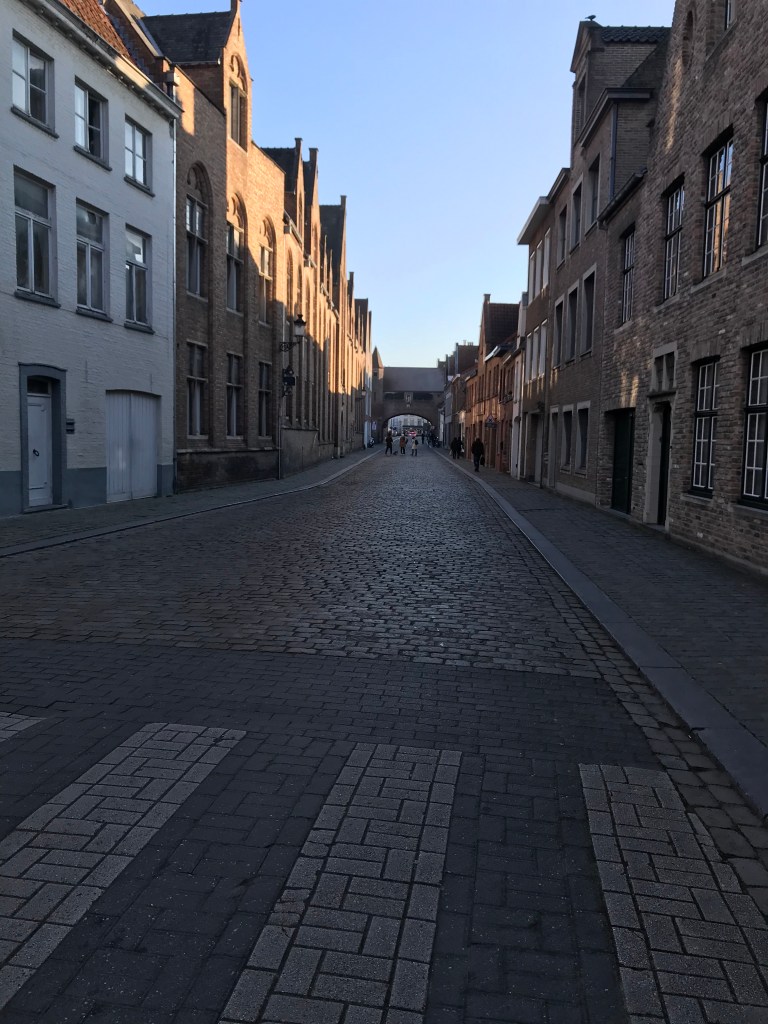
The next morning, we took a train to Bruges! All youth under 26 are eligible for a Go Pass which is a ticket with a flat rate of only 6.50 Euro and allows you to take any train in Belgium. So it was very easy and cheap to travel from Brussels to Bruges. Bruges is a smaller and older city and because it is so picturesque it attracts many tourists. We visited the Grand Place, had more waffles, and visited the most beautiful churches. The highlight of the trip is a tie between the best hot-chocolate of my life and bicycling around the downtown and along the canals. 

The streets of Bruges

The best hot-chocolate was at The Old Chocolate House which is a chocolatery on the main floor and above it is a small café. We got to choose exactly what chocolate we wanted in our hot chocolate including the producer and region it was from. They brought is little bowls made of chocolate filled with our requested chocolate along with huge mugs of steamed milk. The chocolate melted instantly when put inside the mugs and it was the most rich, creamy and delicious thing I have ever tasted. The atmosphere of the place was also great as it is intimate and comforting. We rented the bikes for 2-hours which was enough time to seeing the areas surround the downtown core. It allowed us to see a lot more than we would have on foot. We biked through all the beautiful parks and on a bike path that follows the canal, passing Windmills, swans and daffodils! It was beautiful!

Bruges during the bye ride

We left Bruges and returned to Brussels where we got a train to Arras. It was a jam-packed exhausting weekend, but I got to do everything I have hoped to see and do, and more. I defiantly recommend making the trip if you are in the region!  

The First Week

It’s been one week since I started working as a guide at the two international memorial sites run by Veterans Affairs Canada; Newfoundland Memorial at Beaumont-Hamel and Canadian Memorial at Vimy Ridge. The Winter is a quiet time at these sites but still, visitors come from all over. 

First Day!

I have had the pleasure of giving four guided tours so far, 3 in French and one in English. Each time I find my tours are improving and I am finding my stride. I still stumble on the long numbers in French, but I am hoping that with time and practice it will come more easily. Today was my best tour so far and I had a family of five from Wales. I still can’t get over the awe at how close the German and Canadian observations trenches are to each other and of course the huge Grange crater in the middle of no man’s land is also awe inspiring. 

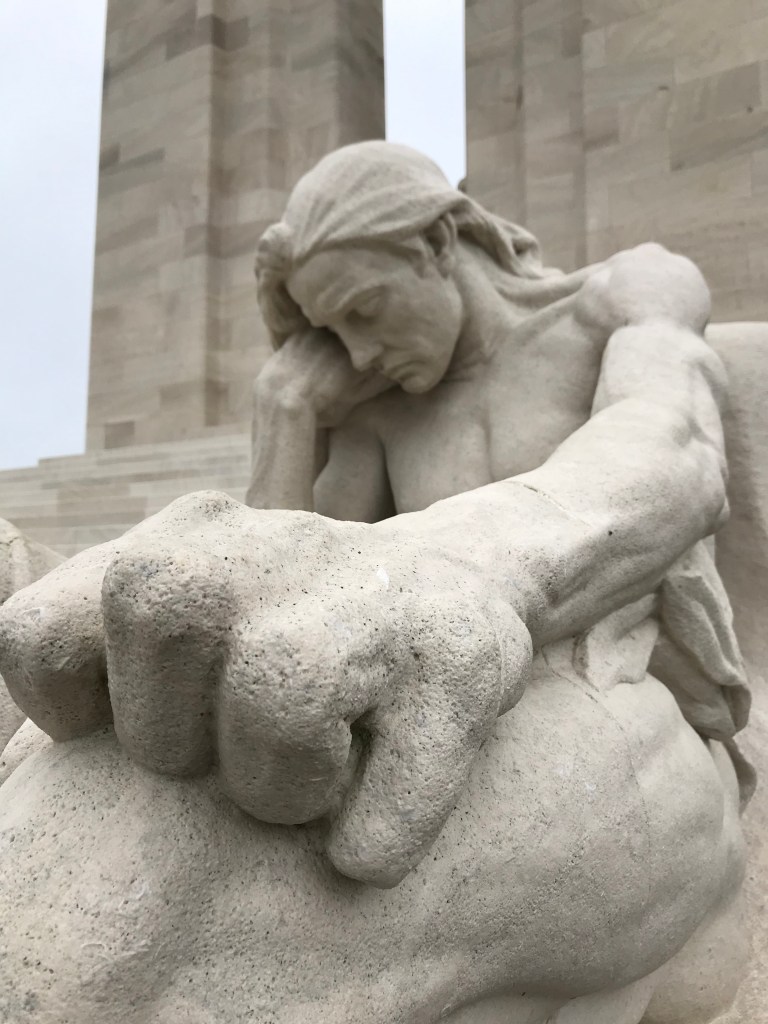
The statue of the grieving father

The majority of visitors at the Vimy site are French locals, some of whom take daily walks through the site. They always stop and say hello and some talk with us about the area and what us guides should visit next. I am learning so much about the area and how the site has changed over the years. Today, a French woman said this was her fourth guided tour and her first had been when she was a young student. She said that every time she takes the tour, there is always something new. So, if you have already seen the site once before, it is worth doing it again. 

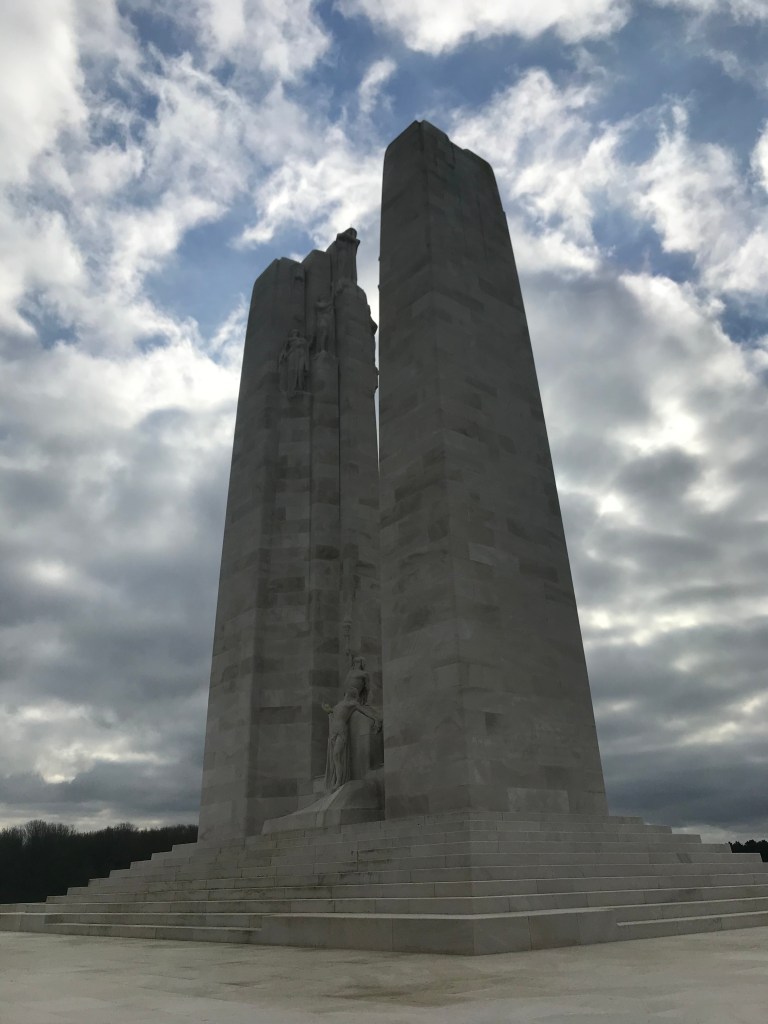
The Sun peeks through at the Vimy Monument

We also get a number of British visitors and a few Canadian visitors. While the French may visit every day, the Canadians always spend at least 3 hours on the site and sometimes spend whole weekends visiting the Canadian monuments. There is nothing quite like seeing a fellow Canadian who feels that same connection to the site as I do. 

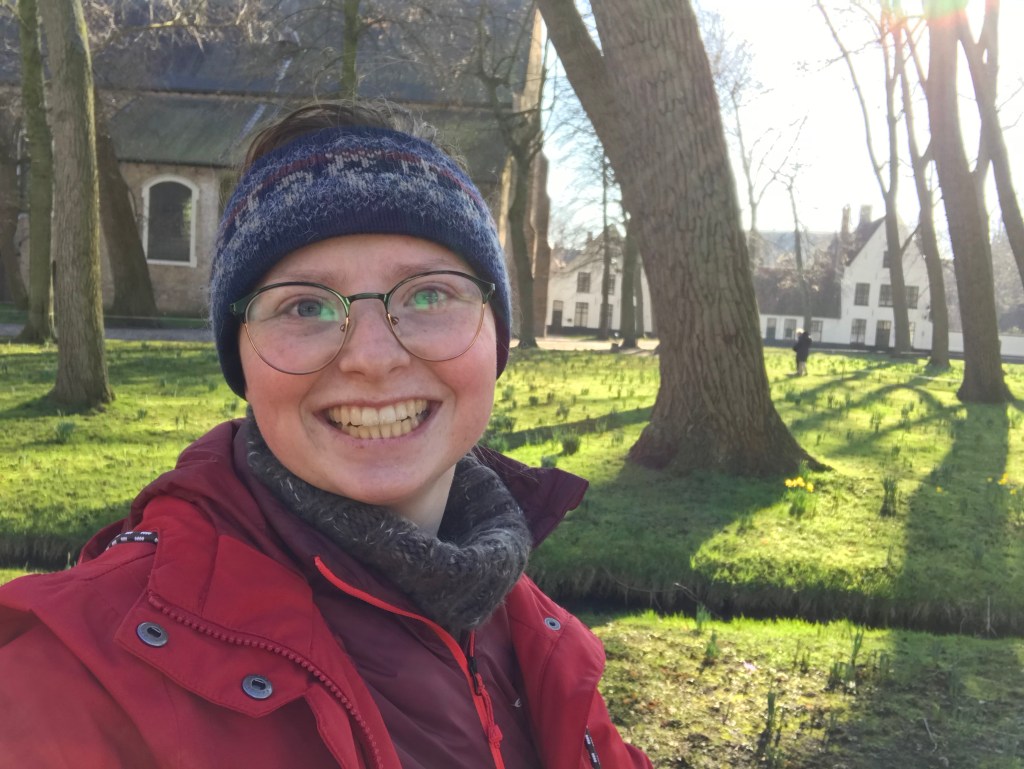
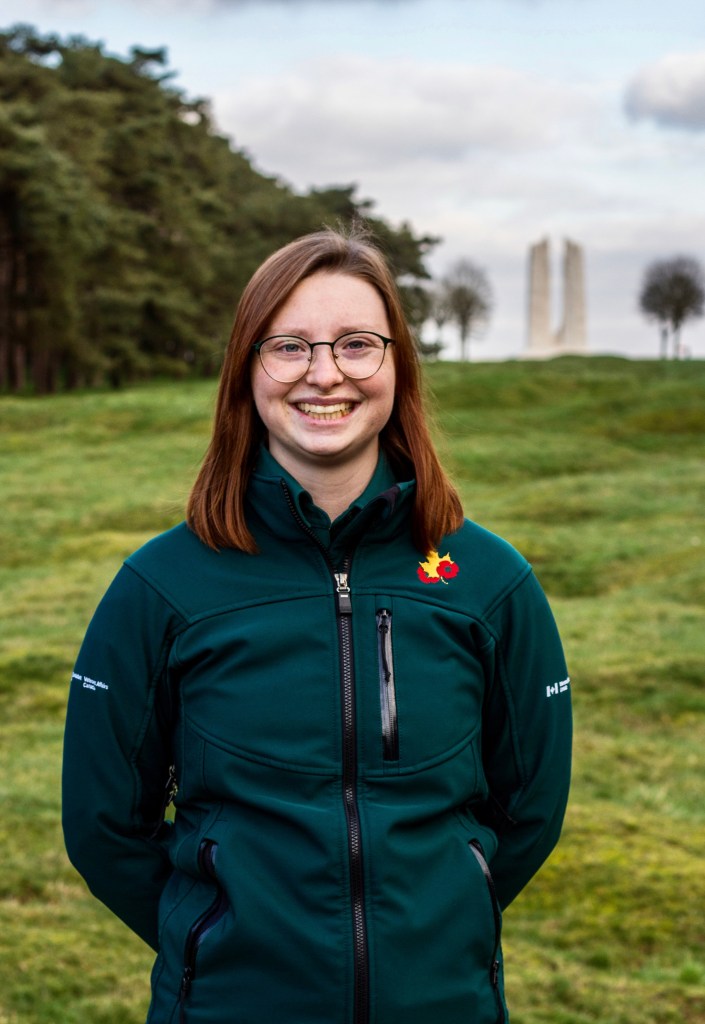
Me!

Training to be a Guide

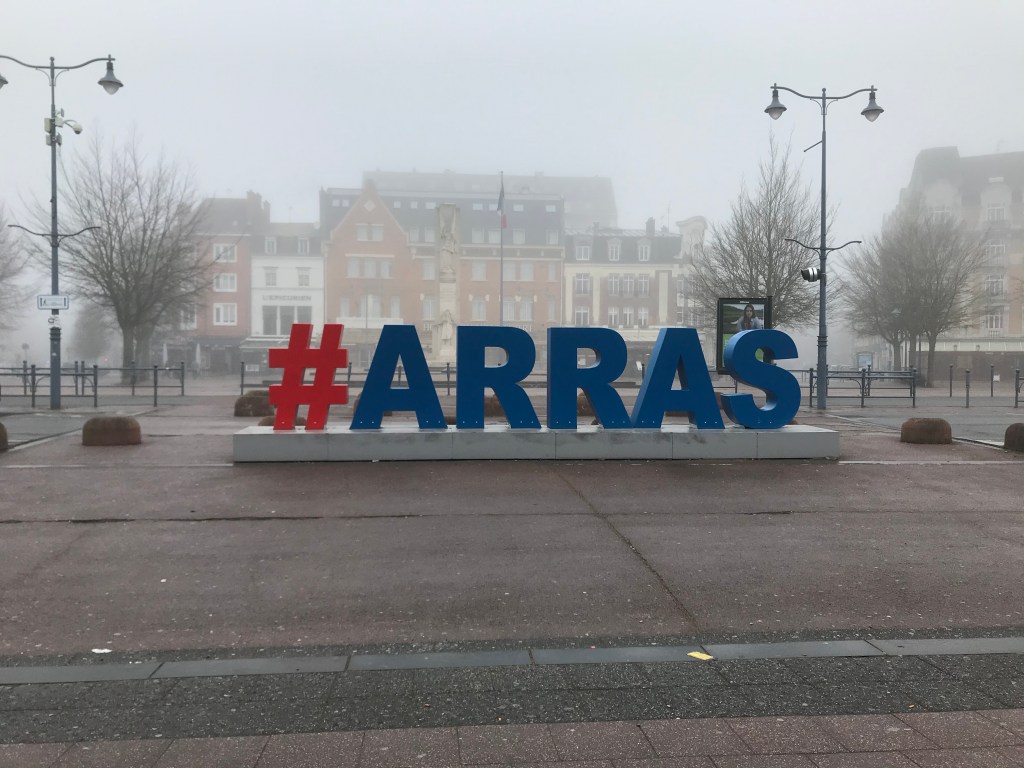
I’m in Arras, France and I have finally completed my training to become a guide for Veterans Affairs Canada (VAC) at their two international memorial sites, Canadian National Vimy Memorial and Beaumont-Hamel Newfoundland Memorial. Training took nearly two weeks with half of focused on historical training and the other operations and site management. 

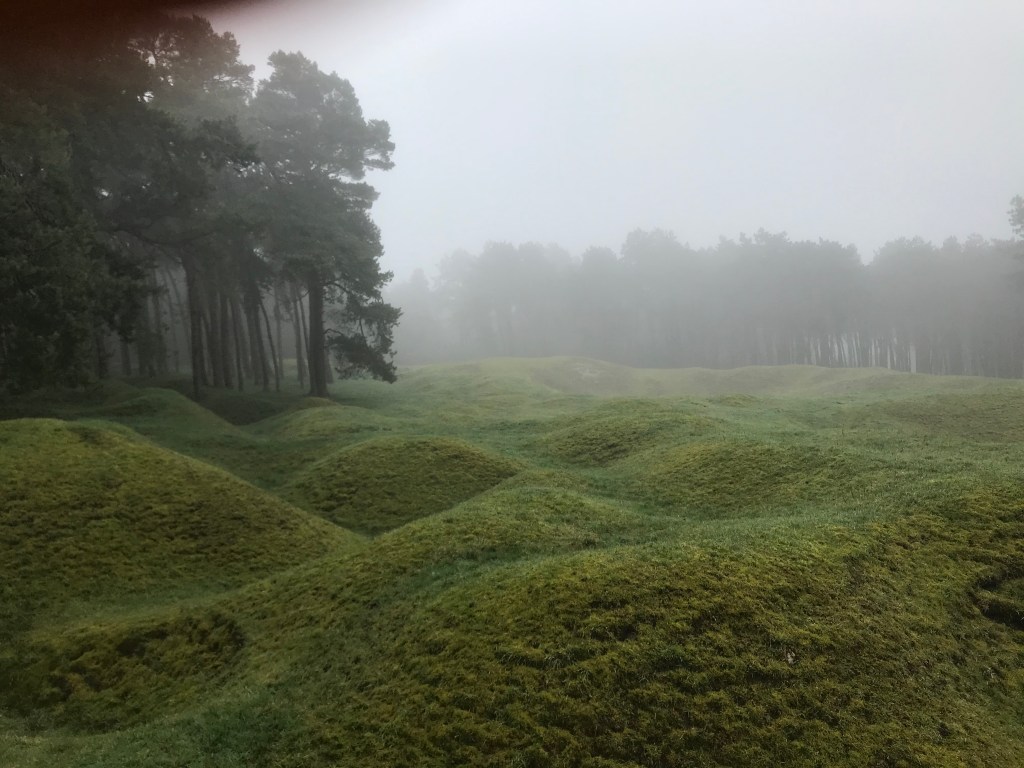
Preserved Trenches at Vimy

The first day, we discovered the sites as guests; listening to the different guided tours and exploring the nearly 325 acres of preserved battlefield. These two sites consist of 86% of the preserved battlefield from the Great War! Vimy also has 100 meters of tunnel open to visitors when accompanied by a guide. Both sites are beautiful and fill me with pride. The grass covered craters and trenches look serene as the morning mist sweeps over them. Furthermore, the monuments are eye-catching and incredibly moving. 

The Newfoundland Caribou Monument at Beaumont-Hamel

The next four days consisted of historical training led by two Canadian historians who are very knowledgeable on the subjects. We started with a very broad overview of the Great War which felt like the most intense history lecture of my life! Then we focused on the battles that occurred near or in relation to the Canadian sites focusing on the Battle of the Somme in 1916 and the Battle of Arras in 1917. Not only did we discuss it in class, but we were fortunate enough to travel to around and explore the terrain the soldiers would have crossed. In both battles, topography played a huge part and it is key to understanding why there was a battle in that area and why it transpired the way it did. Through these lessons, I gained a greater understanding of the Great War and therefore, I can now provide interpretation to the visitors of the sites. 

Vimy Ridge Monument

Training is mentally exhausting because there is so much to absorb in such a small amount of time! My weekend was mostly spent recuperating and preparing for the next week of work which means doing laundry, meal prepping and shopping for the essentials I left behind. We need to be ready to start training at 8:45 and therefore, we leave the residence where the guides live between 7:50 and 8. After work on Tuesdays and Sundays, we go to the grocery store before driving to the university residence where the guides live. So, when we leave in the morning it’s dark and by the time, we return which is between 18h00 and 19h00, it’s dark once more. When I get back to my room, I barely have the energy to make dinner and I often fall asleep within 3 hours of returning from work. It leaves little time to communicate with people back home who are 6 hours ahead. Despite the intensity, I am so incredibly grateful to be here and to receive this training.

The next three workdays are focused on learning hope to open and close up the sites, learning emergency procedures, and preparing our guided tours. It’s a lot to learn in just three days and I know for a fact that I’m going to forget something but luckily there are three return guides who have previously worked at the sites and they are always willing to help us. I’m still practicing my guided tours and I often have a hard time remembering the important numbers like the depth of the trenches and the casualties. Hopefully, it will become easier with time. 

Tomorrow is my first day of work and the sites are opening for another season. Wish me luck!

Warmth and Family Abroad

I arrived in Manchester absolutely exhausted and disoriented looking around every corner for familiar faces. I had never gone through an automated border control system, but I passed through seamlessly much to my relief. As I passed through the exit, I was greeted my warm hugs and smiles from my great-aunt and uncle, J and S, who I had not seen in a few years. The drive to their home was beautiful, and I was surprised to find how very English the British landscape was with it’s green rolling hills, stone walls and hedges. I was glad to have someone else driving because I kept feeling like we were about to turn into oncoming traffic because the cars drive on a different side than they do in Canada. I was surprised to find that my Grandad’s sister’s house felt very much like my grandad’s house. It might have been the smell or the style of furniture but either way it instantly felt like home and as a result, I slept easy on Tuesday night.

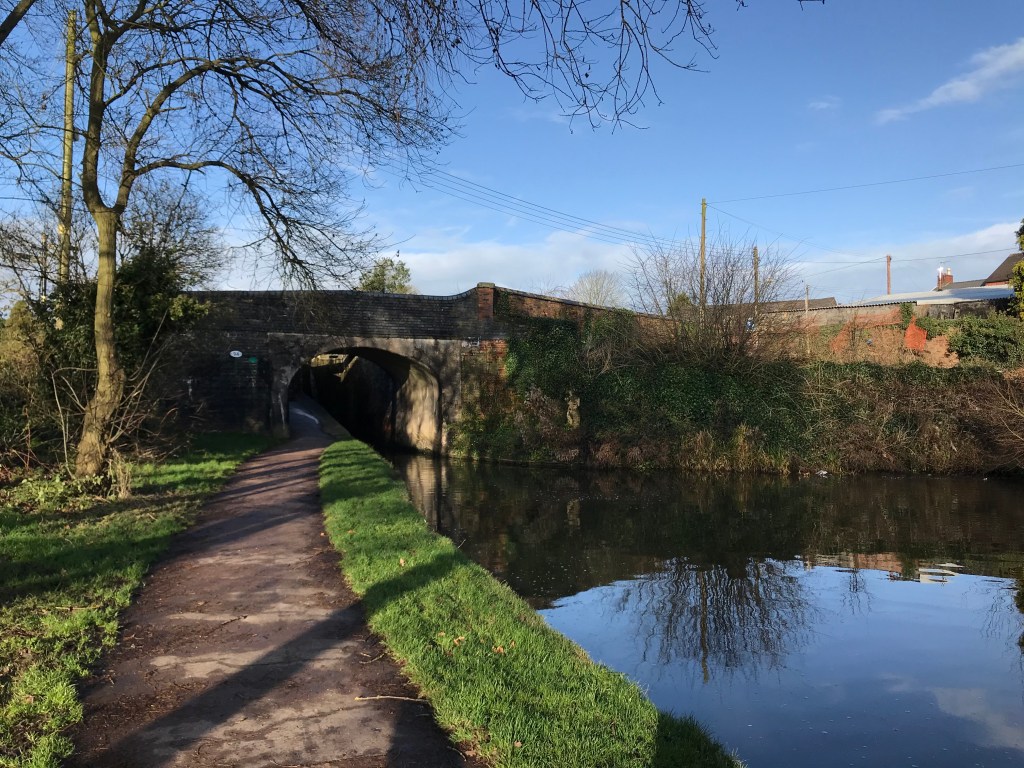
The towpath and the canal

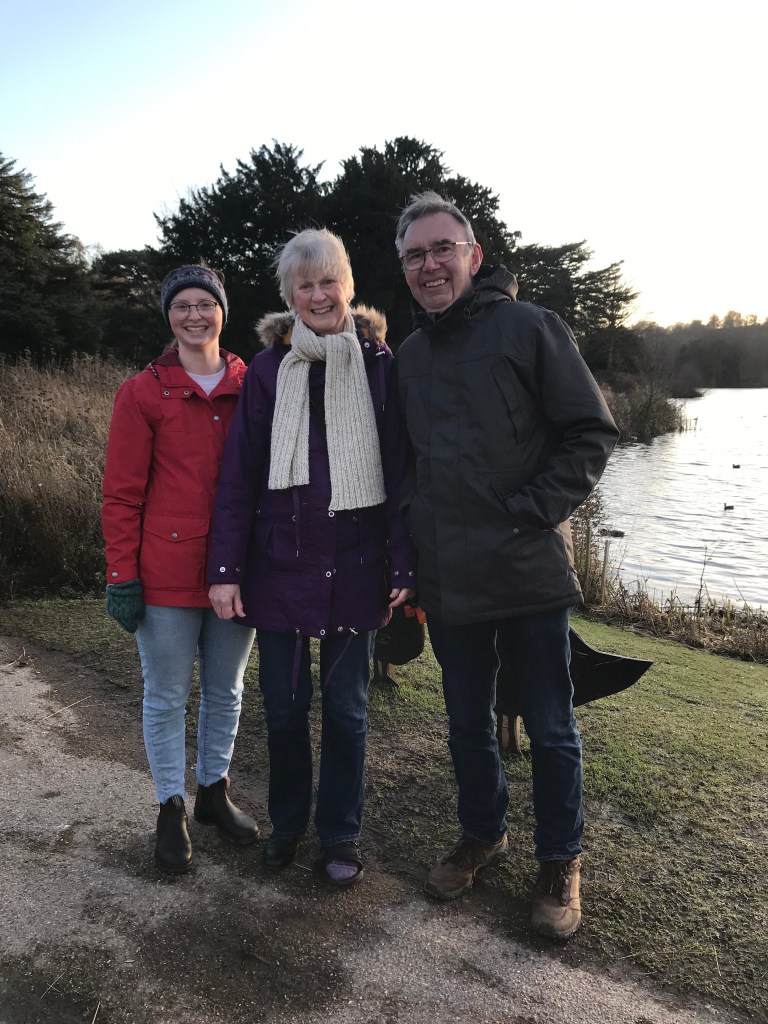
On Wednesday, J and S took me along the canal that runs through their village. We walked along the toe-path where the horses once pulled the narrow boats through the village. We stopped in their favourite tearoom; “The Secret Tea Room” and I could not stop beaming as the waitress with a thick accent got me tea and scones. In the afternoon, we drove to Trentham Estate which is an old estate first recorded in 1086 that has now become a tourist attraction with sculptures and gardens surrounding a man-made lake. We walked the beautiful 2-mile long path around the lake, stopping to look at the swans and the fairy sculptures. It was incredible! I would love to return and see it in the summer when everything is in full bloom.

Me, S and J at Trentham

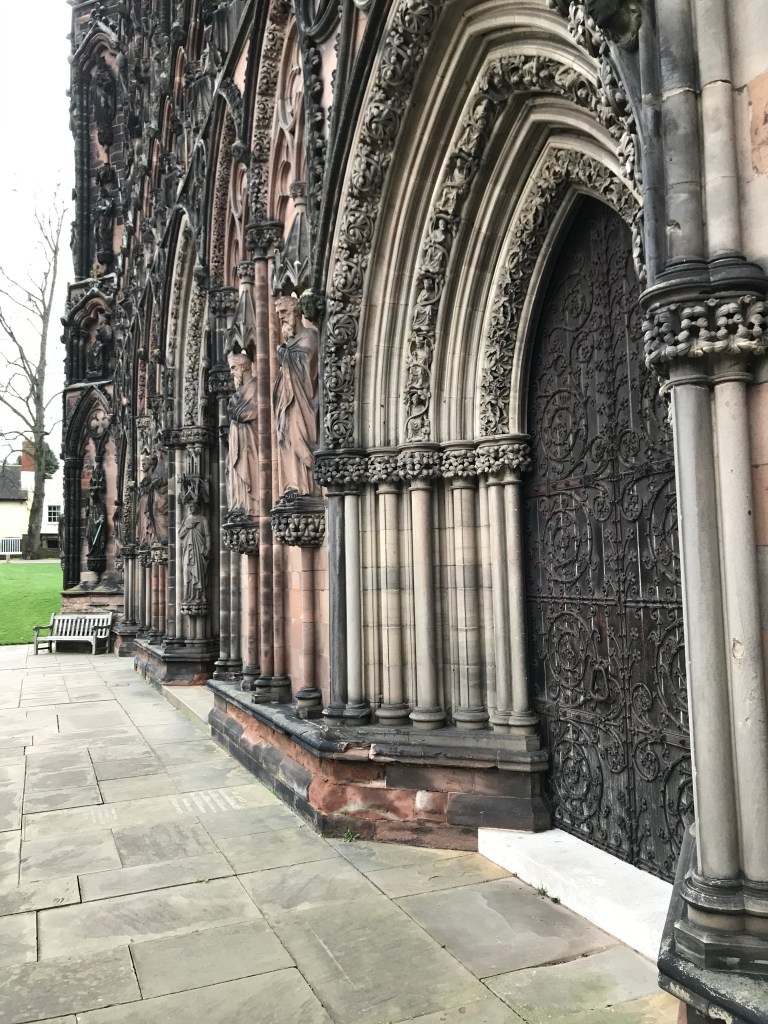
On Thursday, we travelled to the Lichfield Cathedral at the suggestion of my aunt. It is a gothic style cathedral built between 1195-1340 with three spires and is dedicated to St Chad and Saint Mary. The details are astonishing with its intricate details carved into the outside and the inside of the sandstone building. You can’t help but feel the presence of God when standing by the alter and hearing the Lord’s prayer. The cathedral holds the Lichfield Gospels which contain the books of Mathew and Mark and the early part of Luke which dates back to ~730. 

Lichfield Cathedral

I also got the chance to try the regional delicacy of oat cakes which remind me of a gluten free crepe. They were very good and filling especially since mine were filled with bacon and cheese. 

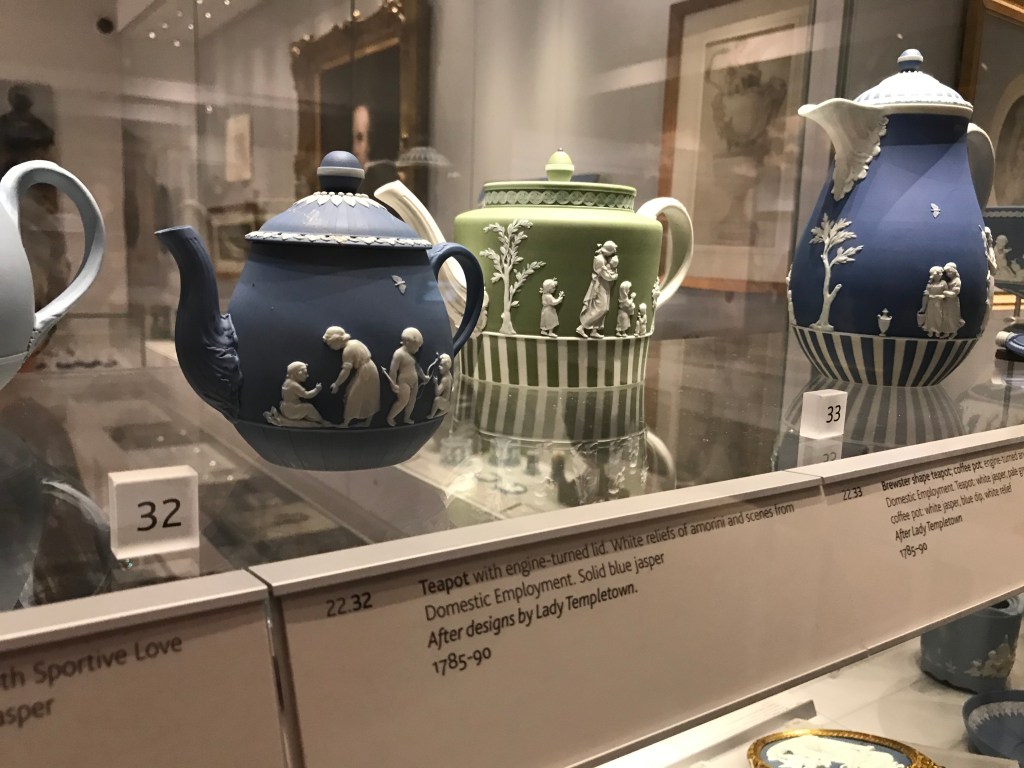
Then we went to visited Wedgewood established by Josiah Wedgewood to see where they create high-end porcelain and china and their famous jasperware. The tour of the factory introduced us to many incredible artists who beautifully design, paint and mold these beautiful china and porcelain creations. We then got to have traditional tea using teacups made on sight which were decorated with 18 karat gold. 

Jasperware Teapots

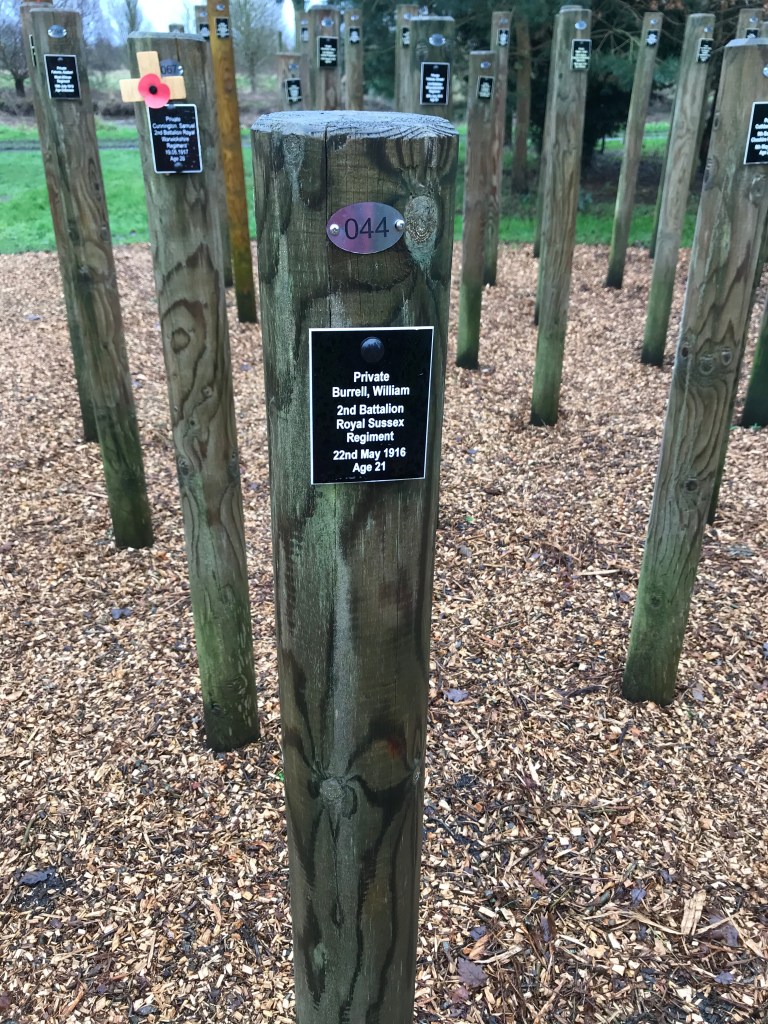
On Friday, we visited the National Memorial Arboretum with my first cousin once removed (L). The cold rainy day did not stop us from enjoying the vast remembrance site with memorials dedicated to the electrical engineering brigade to the Canadian Air Force. The volunteers were numerous and helped us to plan our visit and helped us to interpret areas of the site. The ‘Shot at Dawn Memorial’ was particularly moving as it commemorates the 309 British Army and Commonwealth soldiers executed after courts-martial for desertion and other capital offences during World War I. The wooden stakes that surround the statue of a young blindfolded private awaiting his execution, are inscribed with names, ages, dates, and ranks. The majority seem to be young men in their 20s including 25 Canadians. I can’t help but think of the things these men and I have in common. The 21-year-old Canadian was also in a far from home, having to adapt to a new culture, and was also scared and anxious like me. Private Auger, Fortunate died on March 26th, 1916 after no longer wanting to fight in a European war probably experiencing shellshock only to be killed by British Commanders miles away from home. 

Despite the cool weather, being far from home and feeling anxious, I was surrounded by family and love. S brought me tea in the mornings just like my mum does and L’s husband made paella just like my dad does, my second cousins once removed got into all sorts of shenanigans like my siblings, J taught me so much about the history of the area just like my grandparents would have done, and L told me about her work just like my aunt does. I am so incredibly thankful for their love, comfort and help as I adjusted to a new place. I loved visiting them and England and would readily return.

Taking the First Steps

All my bags are packed; I’m ready to go. Before starting my job, I will be visiting family in the UK. I took a train to Toronto where I caught the UP to the airport and my flight will levae from there cross the Atlantic and land in Manchester. I’m happy to know I will be greated by some familiar faces after 17 hours of travel and I’m hoping that all the transitions will go well. I’m sad to leave home and my family but I’m also so excited to start this adventure. I’ve dowloaded so many TV shows and movies onto my phone but even after listening to music for an hour my phone lost 10% battry charge. Thank goodness the train has plug-ins! Still, I think it would have been wise to get a portable charger.

Last night, my family and closest friends gathered to have a fairwell dinner with paella, cake and apple crumble. It was the perfect send off and I felt surrounded by love and joy which helped my nerves. I am so thankful for all those around me giving me the strength to be adventurous. I definitely could not do it without them!

Design a site like this with WordPress.com
Get started